Technical education in Chile faces a structural challenge: improving student retention in contexts of high socioeconomic and academic heterogeneity.In this scenario, digital transformation is not optional—it is a strategic capability.
At Borx Tech, we work alongside the CFT of southern Chile in designing a comprehensive strategy that combines IT governance, advanced analytics, and predictive early warning models,focusing on real impact on students.
The Starting Point: Disconnected Systems and Low Governance
The initial diagnosis was clear:
Key systems without integration (ERP, academic platforms, student tracking)
Lack of formal IT governance
Absence of a unified data architecture
Limited use of analytics for decision making
This is not a technological problem, but a strategic one. Without integrated data, there is no student visibility or capacity for anticipation.
From Digital Transformation to Institutional Intelligence
The approach was not to "implement tools", but to design a digital transformation strategy 2025–2029,based on:
Automation of critical processes
Platform integration (ERP + analytics + low-code)
Institutional data governance
Development of internal analytical capabilities
This model allows evolving from a reactive operation towards data-driven predictive management.
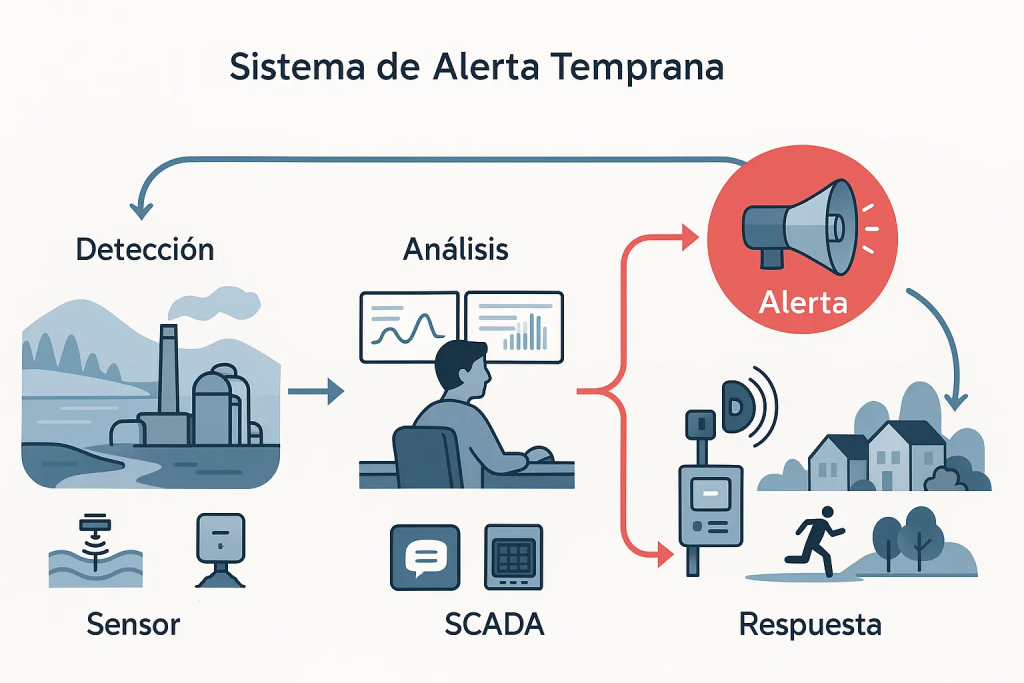
Early Warning Models: From Data to Action
One of the most relevant pillars was the design of early warning models for student dropout,addressing two critical moments:
Admission
Academic progression
The developed benchmark allowed understanding three complementary approaches:
1. Mature Platforms (Immediate Impact)
Solutions like Educore stand out for:
Mass student management
Operational workflows
Fast implementation
2. Advanced Analytics with AI (Future Vision)
Approaches like Technologyhem incorporate:
AI-based predictive models
Cloud-native architecture
High personalization
3. Internal Development (Strategic Capability)
The CFT has already advanced in its own models:
Logistic regression and tree models (Random Forest, XGBoost)
Metrics such as Precision, Recall, and F1
Explainability per student
This point is key: the institution already has emerging analytical capacity, but it is not yet operational at scale.
The Real Challenge: Moving from Models to Operation
One of the most relevant learnings is that having models is not enough.
The internal pilot showed clear limitations:
No alert automation
No assignment of responsibilities
No intervention workflows
Manual integration (Excel)
In contrast, mature solutions allow:
Automatic alerts
Record of interventions
Measurement of impact on retention
This marks the difference between exploratory analytics vs. real institutional impact.
Digital Roadmap: From Foundations to Scaling
The defined roadmap establishes a clear evolution:
2025–2026: Foundational Stage
Data governance
Institutional architecture
Implementación base de analítica (Power BI / Data Lake)
Access and security organization
2026–2027: Scaling
Process automation
System integration
Implementation of early warnings
Consolidation of digital experience
This approach allows advancing with incremental logic, prioritizing quick wins and continuous validation.
Governance: The Forgotten (and Most Critical) Factor
One of the project's differentiators was incorporating a clear governance model:
IT demand management committee
Defined roles (Sponsor, Champion, Project Team)
Prioritization based on institutional impact
Structured methodology (initiation → planning → development → closing)
This ensures that digital transformation is not an isolated effort, but an institutional decision-making system.
Expected Impact: More Than Technology
The implementation of this model allows:
Increasing student retention (benchmarks indicate +4 to +10 points)
Anticipating academic risks
Improving the student experience
Optimizing institutional resources
Making evidence-based decisions
But even more importantly: it allows the institution to evolve towards a real data-driven model.
Conclusion: The Competitive Advantage is Analytical Capability
The case of the CFT of Los Ríos demonstrates something key:
The winner is not who implements more technology, The winner is who builds institutional capacity to use data intelligently.
The right combination is not choosing between platforms or internal development, but:
Using platforms for operation
Developing internal capabilities for differentiation
Integrating everything under a clear strategy
At Borx Tech, we believe that digital transformation in education is not about systems, but about impacting lives through better-informed decisions.
If you are evaluating implementing early warning models or advancing your digital strategy, this is the right time—but how you do it makes all the difference.




 English
  Spanish